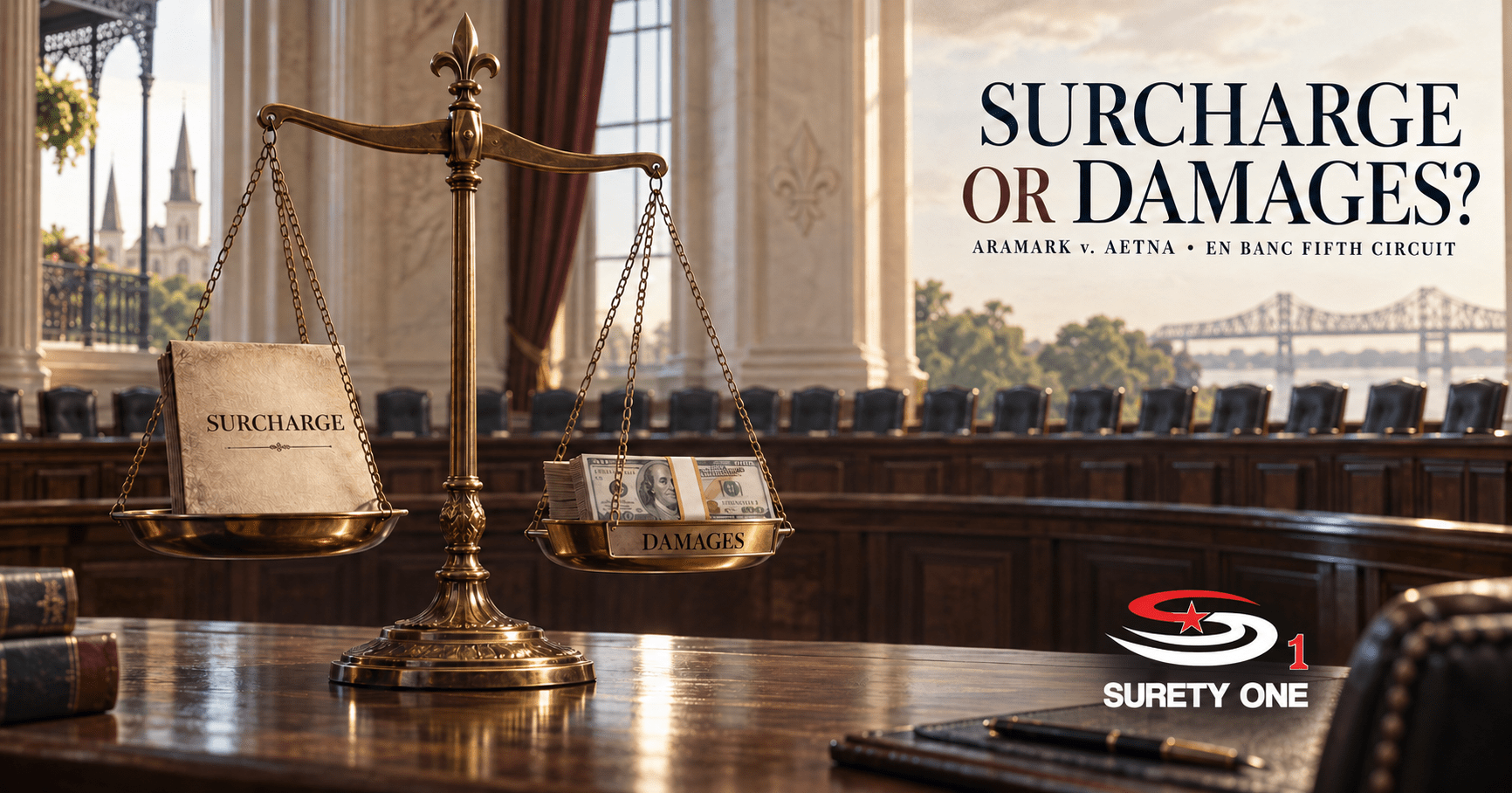
During its September 23 to 25 en banc session in New Orleans, the full Fifth Circuit will hear reargument in Aramark Services, Inc. Group Health Plan v. Aetna Life Insurance Co. (U.S. Court of Appeals for the Fifth Circuit, 2026a). The case has been widely described in the trade press as a test of whether a third-party administrator’s contract makes it a functional ERISA fiduciary. That description is wrong, and the error matters, because the question the seventeen judges will actually decide is narrower and, for self-funded plan sponsors, more consequential: whether a sponsor that sues its administrator for breach of fiduciary duty and asks for its money back is seeking “appropriate equitable relief” within the meaning of ERISA § 502(a)(3). The answer determines not only whether Aramark’s claims stay in federal court or go to an arbitrator in Hartford, but what any sponsor in the Fifth Circuit can recover from a breaching fiduciary at all.
The dispute
Aramark, which self-funds health benefits for roughly a quarter of a million employees, engaged Aetna in 2017 as third-party administrator under a Master Services Agreement effective January 1, 2018. Aetna adjudicates provider claims, handles participant correspondence, and prepares reports; since the agreement took effect, it has collected more than $200 million from Aramark to pay providers. In September 2023, Aramark sued Aetna in the Eastern District of Texas, alleging that Aetna paid millions of dollars in claims that should not have been paid, retained millions in undisclosed fees, approved improper or fraudulent claims submitted by Aetna subcontractors, provided inadequate subrogation services, made post-adjudication adjustments to Aramark’s detriment, and commingled plan funds with its own (Aramark, 2025). The complaint pleads breach of fiduciary duty and prohibited transactions under 29 U.S.C. §§ 1104(a), 1106, and 1109(a), and seeks relief under §§ 1132(a)(2) and (a)(3).
Section 15 of the MSA requires that “any controversy or claim arising out of or relating to this Agreement,” “except for temporary, preliminary, or permanent injunctive relief or any other form of equitable relief,” be arbitrated in Hartford under the AAA Commercial Rules, and it provides that the arbitrator “may award only monetary relief” limited to compensatory damages (Aramark, 2025). Aetna petitioned to compel arbitration in Connecticut and moved to stay the Texas action. The district court denied the stay, holding that the parties had not clearly and unmistakably delegated arbitrability to the arbitrator and that Aramark’s ERISA claims were equitable and therefore fell within the carve-out.
The panel decision and the dissent
A divided panel affirmed on December 18, 2025 (Aramark, 2025). On arbitrability, Judge Higginbotham’s majority applied Archer & White Sales, Inc. v. Henry Schein, Inc. (2019): where a carve-out sits in the same sentence as the delegation language, incorporation of the AAA rules is not clear and unmistakable evidence that the parties delegated arbitrability of the carved-out disputes. Applying the series qualifier canon and Connecticut’s rule of contra proferentem against Aetna as drafter, the court read the equitable relief exclusion as modifying both “controversy” and “claim.” Judge Jones joined that holding.
On the remedy question, the panel split. The majority walked through the Supreme Court’s § 502(a)(3) cases and drew a line between suits against non-fiduciaries and suits against fiduciaries. Mertens v. Hewitt Associates (1993), Great-West Life & Annuity Insurance Co. v. Knudson (2002), Sereboff v. Mid Atlantic Medical Services, Inc. (2006), and Montanile v. Board of Trustees (2016) all involved non-fiduciary defendants, and they hold that against such a defendant only equitable restitution, meaning specifically identifiable funds still in the defendant’s possession, is available. CIGNA Corp. v. Amara (2011) involved a fiduciary defendant, and there the Court explained that equity courts could impose a monetary “surcharge” on a trustee for loss caused by breach of trust, so that “the fact that this relief takes the form of a money payment does not remove it from the category of traditionally equitable relief” (Amara, 2011, at 441). The Fifth Circuit adopted that reading in Gearlds v. Entergy Services, Inc. (2013), abrogating its earlier contrary decision in Amschwand v. Spherion Corp. (2007). Because Montanile said nothing about fiduciary defendants and did not discuss surcharge, the majority held that Gearlds remains binding and that Aramark’s make-whole claim against Aetna, an ERISA fiduciary, lies in equity (Aramark, 2025).
Judge Jones dissented from that holding in terms that read as a roadmap for the en banc court. In her view, Aramark’s surcharge discussion was dicta, acknowledged as such by the Court itself, and Montanile “reverted to the Mertens rule” by insisting that relief is equitable only if it was typically available in equity, expressly reaffirming Mertens and Great-West while declining to distinguish Aramark on the identity of the defendant (Aramark, 2025, Jones, J., concurring in part and dissenting in part). She would have the Fifth Circuit repudiate Gearlds and follow the Fourth Circuit’s Rose v. PSA Airlines, Inc. (2023) and the Sixth Circuit’s Aldridge v. Regions Bank (2025), both of which have abandoned surcharge as a § 502(a)(3) remedy after Montanile. She also flagged a point of particular interest to sponsors: Aramark sued under § 502(a)(3) rather than resting on § 502(a)(2) because relief under the latter “redounds to a plan,” not to the sponsor as the plan’s funder.
On April 28, 2026, the court granted rehearing en banc and vacated the panel opinion (Aramark, 2026a). Amici, including the Pension Rights Center and former Department of Labor officials, have filed in support of Aramark’s position that make-whole relief against a fiduciary is equitable (Bloomberg Law, 2026).
What the case is not about
The panel assumed, without deciding, that both Aramark and Aetna are ERISA fiduciaries. Footnote 42 of the majority opinion states that Aetna did not contest its fiduciary status on appeal beyond promising to “vigorously dispute” it later, and that the question was forfeited for purposes of the appeal and left to a future panel with a full merits record (Aramark, 2025). Judge Jones agreed. Whether an administrative services agreement confers enough discretion on a TPA to make it a functional fiduciary under 29 U.S.C. § 1002(21)(A)(iii) is an important question, but it is not the question before the en banc court, and readers who have been told otherwise should recalibrate. The en banc court is deciding what a fiduciary can be made to pay under § 502(a)(3), and, derivatively, who decides that question when the parties’ contract carves equitable claims out of arbitration.
Why the ERISA equitable relief question matters to sponsors and their insurers
For a self-funded employer, the administrator is the fiduciary that touches the money. If the en banc court adopts Judge Jones’s position, a sponsor in Texas, Louisiana, or Mississippi that discovers its TPA has overpaid claims, retained undisclosed compensation, or mishandled subrogation will find that § 502(a)(3) offers it an injunction and, at most, restitution of specifically traceable funds. Money that has been paid out to providers is by definition not in the TPA’s possession. The sponsor’s recovery would depend on § 502(a)(2), which requires that the money go to the plan rather than to the employer that funded it, or on whatever contractual remedies survive the arbitration clause and the MSA’s limitation of damages. That is a materially different world from the one Gearlds describes, in which the sponsor may obtain make-whole relief from the fiduciary in court.
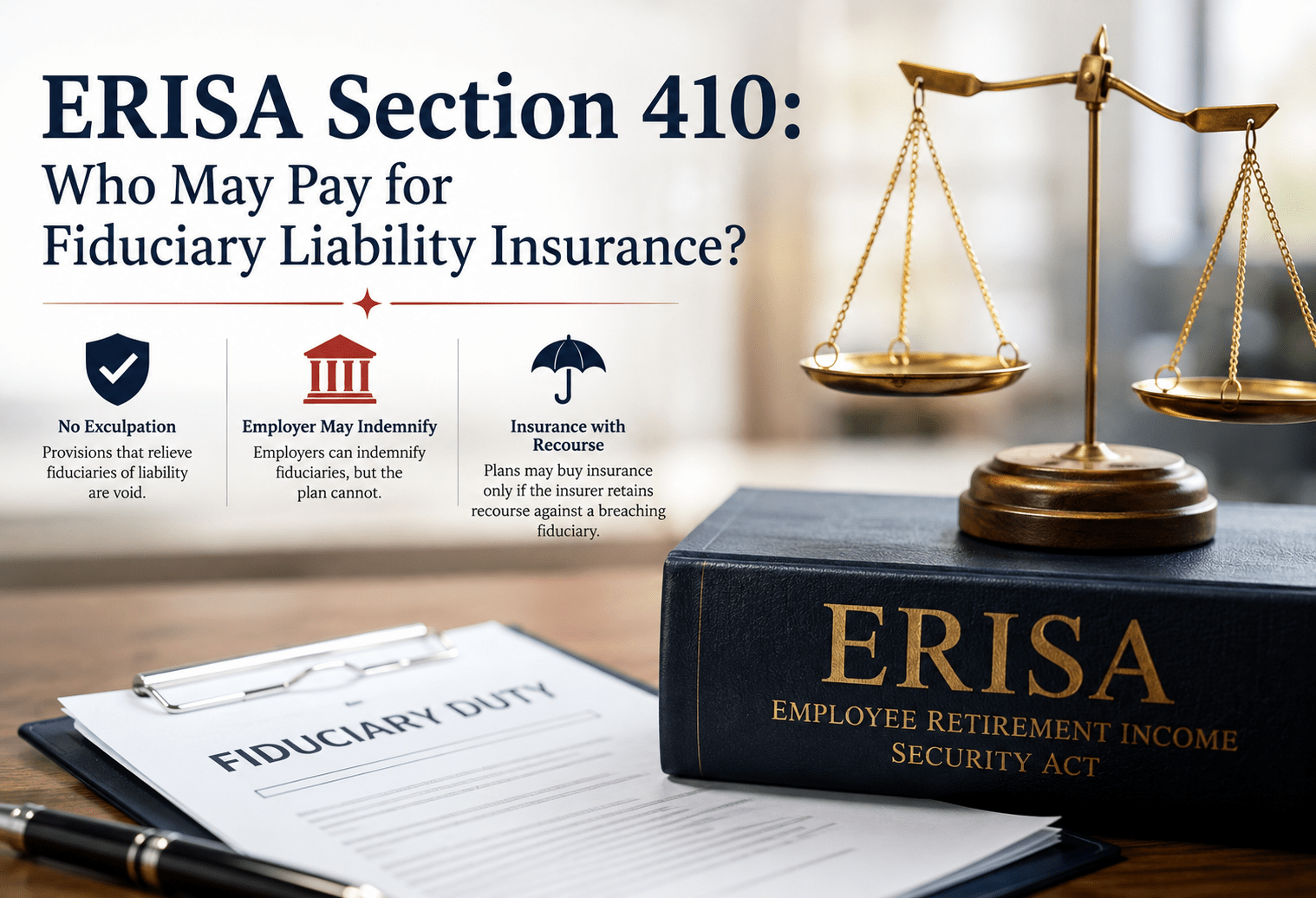
The coverage consequences follow directly. Fiduciary liability policies define “Loss” in terms of damages, settlements, and judgments, and most exclude amounts that are uninsurable as a matter of law, along with the return of fees or compensation to which the insured was not entitled. Whether a court characterizes a make-whole award against a TPA as compensatory damages, equitable surcharge, or restitution of the TPA’s own fees will bear on which parts of a judgment are “Loss” and which fall within a restitution or disgorgement exclusion. The same characterization affects the TPA’s errors and omissions and fiduciary programs, the sponsor’s own fiduciary policy (since a sponsor that failed to monitor its administrator is the next defendant in the participants’ suit), and the allocation between them. A plan committee that has never read the “Loss” definition in its fiduciary form alongside the remedy provisions of its administrative services agreement should do so before the en banc opinion issues. Our underwriters at FiduciaryLiabilityCoverage.com negotiate those definitions on every self-funded health plan placement, precisely because the remedy law is unsettled and the policy language has to work under either outcome.
The § 412 fidelity bond occupies a different lane, and the Aramark allegations illustrate it. ERISA requires every person who “handles” plan funds to be bonded, and the Department of Labor’s regulations treat a third party administrator that receives, disburses, or has access to plan money as a handler subject to the bonding requirement (29 U.S.C. § 1112(a); 29 C.F.R. § 2580.412-6). Aramark alleges that Aetna commingled plan funds and retained fees it was not entitled to keep. Those are allegations, not findings, and imprudent administration is not dishonesty; the bond responds only to loss caused by fraud or dishonesty on the part of a bonded person. But a sponsor that has confirmed its administrator’s bond, its amount, and its coverage of the specific funds flowing through the administrator’s accounts has closed the one exposure that neither § 502(a)(3) nor a fiduciary policy is designed to address. That confirmation takes minutes at ERISA-Bonds.com.
Drafting lessons while we wait
Two practical points are already settled by the arbitrability holding, which no member of the panel disputed and which the en banc court is unlikely to disturb. First, the placement of a carve-out within the arbitration sentence itself, rather than in a separate provision, is what defeated Aetna’s delegation argument under Archer & White. Administrators drafting services agreements who want an arbitrator to decide whether a dispute is arbitrable must say so expressly and must keep the carve-out out of the delegation sentence. Second, a clause that limits the arbitrator to “monetary relief” while excluding “any other form of equitable relief” from arbitration invites exactly the surplusage argument Aramark won. Sponsors, for their part, should understand that an equitable relief carve-out is the door through which a fiduciary breach claim reaches a federal judge, and should resist administrators’ efforts to close it.
The en banc court will hear argument the week of September 23. A decision reversing the panel on the remedy question would deepen the circuit split among the Fourth and Sixth Circuits on one side and the circuits that continue to follow Amara on the other, and would present the Supreme Court with a question it left open fifteen years ago. We will report on the argument and on the opinion when it issues. Follow our ERISAblog for updates on ERISA bonds, fiduciary liability insurance and all things ERISA.
~ C. Constantin Poindexter, MA, JD, CPCU, AFSB, ASLI, ARe, AINS, AIS, CPLP
References
- Aldridge v. Regions Bank, 144 F.4th 828 (6th Cir. 2025).
- Amschwand v. Spherion Corp., 505 F.3d 342 (5th Cir. 2007).
- Aramark Services, Inc. Group Health Plan v. Aetna Life Insurance Co., 162 F.4th 532 (5th Cir. 2025) (Higginbotham, J.; Jones, J., concurring in part and dissenting in part), vacated and rehearing en banc granted, 173 F.4th 744 (5th Cir. 2026a).
- Archer & White Sales, Inc. v. Henry Schein, Inc., 935 F.3d 274 (5th Cir. 2019).
- Bloomberg Law. (2026, July 23). Aramark gets backing in Fifth Circuit ERISA fight with Aetna.
- CIGNA Corp. v. Amara, 563 U.S. 421 (2011).
- Employee Retirement Income Security Act of 1974, 29 U.S.C. §§ 1002(21)(A), 1104(a), 1106, 1109(a), 1112(a), 1132(a)(2), 1132(a)(3).
- Gearlds v. Entergy Services, Inc., 709 F.3d 448 (5th Cir. 2013).
- Great-West Life & Annuity Insurance Co. v. Knudson, 534 U.S. 204 (2002).
- Mertens v. Hewitt Associates, 508 U.S. 248 (1993).
- Montanile v. Board of Trustees of the National Elevator Industry Health Benefit Plan, 577 U.S. 136 (2016).
- Rose v. PSA Airlines, Inc., 80 F.4th 488 (4th Cir. 2023).
- Sereboff v. Mid Atlantic Medical Services, Inc., 547 U.S. 356 (2006).
- Temporary Bonding Rules, 29 C.F.R. pt. 2580, including § 2580.412-6.
- U.S. Court of Appeals for the Fifth Circuit. (2026b). En banc session, September 2026 [Court notice listing No. 24-40323 for reargument].